Exploring the world's built environments and seeking sustainable solutions.

Saturday, July 27, 2013

Malmö: An International City

by Alicia Brown and Jessica Bracht

On Wednesday we said goodbye to Stockholm and took the train to the southernmost part of Sweden, to a city called Malmö. Located right between the North and the Baltic seas, Malmö has for centuries been a destination for people from countries all over the world, due to its ports and industry, and more recently has become somewhat of a beach town. More than 100 languages are spoken from a population of 300,000 and counting, and one of the factors driving Malmö's ever-increasing growth is its efforts in becoming a sustainable city.

Upon arriving in Malmö we walked from Central Station to our hostel. After stopping a few times to find the right streets we found ourselves at the Stortorget plaza, a very central part of Malmö. The Stortorget Plaza is a huge area cluttered with shops, cafes, bars and restaurants. It is a main focus point and meeting area for all of Malmö. Because of its central location it is the perfect venue to host a variety of festivals and events that attract the attention of citizens and tourists alike.

Currently the plaza is hosting an International Food Fair bringing foods from all over the world to one location. Holland, Spain, Germany, Poland, France, Italy and Australia are a few of the countries participating in this event. Each place sells goods like foods and desserts, meats and cheeses, soaps and kitchenware that are all representative of their county. The festival is a limited event and is only in Malmö from July 24 – July 28, lining up perfectly with our stay here. The festival provides the opportunity for all visitors to taste food from around the world in one spot. We, for example, have tasted paella from Spain, bratwurst from Germany, pastries from Italy and curry from Thailand. 


Beyond providing a great variety of food choices the festival is socially and economically sustainable. On an ordinary day the plaza is well traveled by citizens going to and from work and tourists visiting Town Hall and the surrounding parks. But in adding the festival the Stortorget plaza is transformed into a hang out place, a lunch and dinner spot and a shopping center; an attraction that cannot be missed, bringing business to the shops, cafes and restaurants that permanently line the square. The city of Malmö benefits economically by hosting the festival in their central plaza. Socially, the festival brings together a wide variety of cultures through the food they sell and the people it attracts. Walking around the plaza is a very diverse population, all of whom come together to celebrate foods from all over the world. The plaza is transformed into an international meeting spot for people to gather and learn about each other’s culture. Festivals such as this one are important because of the opportunity to try new foods and meet new people. In order to move towards a more sustainable world everyone needs to work together to change their habits and mindsets to make the necessary changes from harmful environmental practices to more environmentally conscious ones.


Another place that has succeeded in bringing together the social and environmental aspects of sustainability is the Western Harbor. Malmö has invested heavily in redeveloping its beachfront in an old industrial district, and it shows. Much like Hammarby in Stockholm, the Western Harbor is Malmö's largest sustainable development project. All the environmental efforts are particularly impressive, such as the storm water management strategies, the energy efficiency of the buildings, and the pedestrian and bike paths, but we believe one of the biggest sustainable successes of the area lies in its ability to bring people together to an enjoyable and interesting place.

Malmö is constantly showcasing its diverse population, which it does here in the design of its houses. Several of the houses we passed had very distinct themes from other countries, including the high, peaked roofs of Holland and the simplistic, symmetrical style from Germany.

German style architecture and design

Another of the interesting features we noticed in the Western Harbor were its public spaces, which encouraged people to meet and interact. The extensive beach front is punctuated with parks, piers, restaurants, and even an amphitheater that is formed from the hills, where music comes from the ground. In a place of such high diversity, attractions such as these are particularly important because they bring people together and help reduce conflict and tensions between all the various ethnic backgrounds that live in the city.

Thursday, July 25, 2013

The Jungle Island of Utö: Exploring the Archipelago

On our first day off, we decided to get out of the city and experience the more natural scenery.  We traveled with a group of 11 to Utö, a small island in the archipelago.  Although the trip there was hectic and complicated, it was very much worth it. We were all very impressed with the efficiency and connectivity of each form of transportation.  First we took the inner city subway to central station, where we boarded a commuter train to the outskirts of the city.  We then boarded a bus full of people bound for Utö, which took us directly to the ferry stop for the final leg. It was interesting that most of the other people on the bus and ferry to the island seemed as though they often relied on public transportation as their primary mode of travel, a system that doesn’t seem to exist in the United States. As compared to the US where everyone uses personal vehicles on a daily basis, this was definitely a reliable and sustainable observation.
            Once on the island, we observed even more sustainable practices.  There was minimal pavement almost anywhere on the island, and most of the roads were gravel or dirt.  Because of this, runoff is disposed more naturally and doesn’t contaminate, flood, or cause as many issues as it would if pavement were utilized.  The lack of an extensive road system allowed for sparse car usage, and most people travelled by foot or bike.  Upon arriving at the island, tourists flocked to bicycle rental shops to use them for the day.  We came upon the cheapest option for bike rentals, and from there decided to get lunch at a nearby restaurant.  Next we rode along the gravel path through the birch forest, noticing along the way how little land was built up and just how much the people there seemed to care about keeping nature the most important part of Utö.
            A few kilometers down the road, we found a secluded beach on the lake where we decided to stop and check out the scenery.  Those of us who wanted to swim in the frigid Baltic Sea chose to swim up to a seemingly isolated dock a few hundred feet away. Once we all hopped on, a woman and her daughter walked down to greet us. We were hesitant once we noticed the house in the background, and asked if they wanted us off of their property.  Much to our surprise they were very kind and hospitable and offered us towels, water, juice and cookies.  We declined their offer, but the generous family proceeded to bring us armfuls of towels and refreshments.  It was definitely a pleasant encounter, and we continued to talk with them about Utö, the city of Stockholm, our study abroad tips, and they even gave us a few tips on speaking Swedish.  After awhile they noticed we were freezing and offered to row us back to our little beach.  We were all surprised by their welcoming and giving dispositions, and frankly we could have stayed there all day.  We agree that it was definitely the most pleasant experience either of us have ever had with a stranger.

            After thinking about how open these people were to newcomers and taking so much interest in our trip and our lives back home, we began to realize that this was a characteristic common of many Stockholm citizens.  Assuming that this attitude is present through out Stockholm and most likely all of Sweden, we think this may be a contributing factor as to why Sweden is so much more advanced in sustainable development.  If the whole country is open to new ideas then change is bound to happen more quickly and efficiently.  In the US, however, we generally seem to be less inclined to accept changes and new ideas from different countries and people around the world. This might be a major reason why the sustainable cities in Sweden are far more innovative in their designs involving sustainability than American cities. Not only would it be wise to take home some of Sweden’s design and policy ideas, but it wouldn’t hurt to adopt some of their character traits as well.
Our group with the family that we met (Eleanore and her mother)

Cheers from Stockholm!
Sarah Skinker & Diana Grandi

Tuesday, July 23, 2013


Exploring Stockholm with the tunnel-bana

T-Centralen (Elvis Wong)
Navigating through the Central Station of Stockholm was pretty intimidating at first. Those early bird commuters who leave their homes at the crack of dawn (which is at 4:30 in the morning) will undoubtedly experience the metro system a lot more differently than the other 200,000 or so each day who catch the rush hour trains just a few short hours later. When Arek and I arrived at the T-Centralen (or T-Central in English) from Slussen, it was about mid afternoon. Before we could even step off of the train, an influx of hurried and impatient passengers bumped into us and squeezed onto the train before it promptly took off for the next station. Immediately we were greeted with a sea of chaos – men and women in business suits with eyes glued to their smart phones, mothers and fathers pushing baby carriages in one hand and coffee in the other, groups of teenagers, backpackers, tourists, street performers, and beggars – T-Centralen is where they all went or where they all ended up.
    Being the hub of high-speed public transportation, T-Centralen is a great place to go if you don’t mind the fast-paced, adrenaline-pinching hustle and bustle culture associated with taking any metro in a big city. Because it is the Central Station of Stockholm, T-Centralen easily connects every part of the inner and outer city. What’s nice about it is that it can also bring you to all of the major suburbs in the greater Stockholm area, which allows the 1.6 or so million of its inhabitants both the convenience and luxury of traveling to and from Stockholm and back to the comfort of their homes with just a 10-15 minute train ride.
    Not only is taking the metro great for citizens, it also fares well with tourists like Arek and myself. With our Stockholm Cards in hand, we were able to travel from place to place with relative ease, but I do have to point out that at first it was quite confusing. Being able to look at a map of the metro system and figure out which lines to take in which direction on which platform was at first difficult. What took me a while to realize was that all the metro lines at T-Centralen do not run on one level even though a glance at a map would seemingly indicate otherwise. With that said, I learned that the 20 or so lines that run through T-Central are divided throughout 4-5 stories of underground infrastructure.
    Besides the metro system, T-Central is also a center for aboveground transportation such as busses, light-speed rail, intercity high-speed rail, and even inter-continental travel. Along with multi-modal transportation systems, T-Central offers its passengers and customers with a wide variety of shops, boutiques, restaurants, convenient stores, food co-ops and grocery stores, and even art installations to enjoy as they go about with their day-to-day activities and travels. Who wouldn’t want to be there?


Kungsträdgården (Arek Medina)
The ride into King’s Garden Station, Kungsträdgården, is short and sweet. The three or four times we rode the line we only had to wait a few minutes at T-Centralen for our ride. The ride itself was great, it lasted about three or five minutes and it was smooth and quiet. Each train has plenty of seating and ample railings in case travelers need to stand. Most importantly, the trains are clean, which made taking the tram that much more appealing. Overall the public transit experience is way different in Sweden than my experiences in America. It’s much more connected to other means of transit and the stops are much more convenient. Because of this, we actually enjoyed going back and forth on the tram.
Another amazing aspect of the Stockholm subway system is the art in each station. Kungsträdgården is no exception. The floor of the terminal is painted with vibrant green, red, and white patterns, and as we made our way to the exit, a great “bridge” over two exhibits featuring interesting sculptures and climbing vegetation greeted us. Every time we got there I always had to look at both sides because the displays were so cool. Kungsträdgården was definitely my favorite stop along the Stockholm subway. Even the escalator is awesome because the station is so far underground. It goes up so far that you have to almost put your head at level with the railing to see the top, and the ride up or down takes several minutes if you don’t walk.
One downside we observed with the Kungsträdgården line is that it’s relatively short from T-Centralen. We noticed less people on the line compared to other lines, which could mean it isn’t as efficient or useful as the more popular lines. Of course this makes it better for tourists with the all-inclusive Stockholm Card, like Elvis and I, and we made a point to milk our Stockholm Cards by riding the subway free time and time again to do research for class or pick up a delicious sausage from our park side sausage guy.


Monday, July 22, 2013

Karlstad and Tuggelite - Saturday, July 20th
by Clair and Melissa

On Saturday, July 20th, our class took a trip to Karlstad and saw the Tuggelite ecovillage. Karlstad is a city of 60,000 in the interior of Sweden. Coming from the dense environment of Stockholm, Karlstad was a very different type of city. It still had a prosperous downtown, which was pedestrian and retail friendly, and was well connected to the train station with a bus system running through the town. We met Romina, a former student of Jeff’s, who currently lives and works in Karlstad. She took us to the city center, where we borrowed enough bikes for the whole class to take to Tuggelite.  It was great to be on bikes again (for those who go to UC Davis!) and everyone enjoyed the fresh air and rural atmosphere of Karlstad as we rode 45 minutes along the river to Tuggelite. The coolest part of this bike ride was a device on the side of the bike path that counted the number of bikes riding past it going in either direction, a clever marketing strategy to encourage bike riding.

Tuggelite was founded in 1984, and was the first completed eco-village in Sweden, now housing 16 families. For many of its founders, the eco-village was a way to escape the ever-dominant use of nuclear energy. The goal was to heat the homes using wood-pellet furnaces, which are quite cheap and efficient. The city of Karlstad as a whole has now adopted this idea as well, using wood-pellet furnaces for “district heating” of neighborhoods. Every home in Tuggelite also has a greenhouse attached to its southern wall. This helps insulate and heat the home as well, minimizing energy costs. The walls of every home are very thick, cleverly saving energy costs for the homes as they stay cool in the summer and warm in the winter.

Albert, one of the residents of Tuggelite, was kind enough to invite us into his home and we toured the four bedroom house that he and his family inhabited. The floor plan was very bright and open, and he also has the largest greenhouse in the neighborhood! While talking to us about the advantages of living in an eco-village, Albert stressed how much he loves it in Tuggelite because he knows his neighbors well and can count on them when he needs assistance, which is sometimes necessary because he is physically disabled and uses a wheelchair. Albert only started using a wheelchair ten years ago but has lived in the village since it was founded, and he says that it has been very easy to adapt and expand his home in Tuggelite to better serve his current needs.

What seemed to be a recurring important aspect of the Tuggelite eco-village is their emphasis on community. Our tour guides for the day kept referencing the friendliness and familial care that each community member had for one another, something the young girls said was not common among their classmates who live outside of the village. The community members hold meetings twice a month, and work together to clean, garden and maintain the village property in shifts. The meetings are also important for making community decisions, such as whether or not to hire a daycare worker, or to build a communal vegetable garden. The Common House, shared between all the neighbors, contains guest rooms where visitors can stay for free and space which is used as a daycare for the children of the community and those living in the adjacent city blocks.

This trip was eye-opening and allowed us to appreciate where eco and community living ideas first started, which are now becoming popular in many parts of the world, including the USA. I wouldn’t go so far as to say that all the students who visited Tuggelite are now motivated to become new eco village residents, but the ideas and practices being successfully implemented in Tuggelite are influential to all of us because they have become popularized methods of “green” living, and will continue to spill over into the designs of many future communities that we will be involved with.

Friday, July 19, 2013

Kungsträdgården: The Versatility of a Community Green Space


By, Victoria Brinkerhoff and Elizabeth Kelley

It was a Wednesday night at 9:30 pm when we strolled through Kungsträdgården (The King’s Garden) towards the very American, yet extremely crowded and popular, TGI Friday’s restaurant. Walking from South to North, we observed that the centrally located garden consists of three sections that each serve a different function, especially in the evening. The first area presents a fountain and sections for people to congregate, the second is a hub of lively entertainment, and the third is a relaxed lounging spot (mainly for lovers) on the outskirts of a fountain drained when the sun sets. We observed the latter two areas in detail and came to understand the immense versatility of the community green space, which is one of the ways Stockholm promotes a denser lifestyle through combining relief from purely cobble stone roads and traffic with nature and entertainment.

An overview of the area in front the garden's stage 

Within the section of The King’s Garden that serves as a center for entertainment, the main point of attraction is the concert stage placed in front of benches and a tiled dance floor. The public is able to escape the garden’s surrounding commerce and enter an area of the green space strategically planned for their entertainment. To the left of the stage when viewing it from the front is a series of tents holding tables and benches, a bar to get beer, and another dance floor and more live entertainment - today the band belted “Sweet Home Alabama.” The tent alters the green space so that the public can enjoy entertainment and be physically sectioned off from the surrounding cafes and large concert stage, all while having easy access to a lower key setting equipt with nature when they wish.

The permanent stage and benches in the garden

The tent and dancing area 

            When we continued to walk across the garden, the function of the space transitioned into a location for sprawled relaxation on benches and children to run and play; yet, the public still orients themselves around the water feature that loses visual appeal when it is drained at night. People still rest on the benches around the water feature the most, rather than benches on outskirts of the feature’s perimeter. However, while relaxing and socializing, the public is still able to observe the large flower centerpieces lining the edges of the water feature. The centerpieces bring natural elements into the section of the garden that is more dominated by concrete than the others.  

A little girl running through the drained water feature

The people which inhabited Kungsträdgården that night come just as diverse as the activities which occur within the space. At any moment in the evening there were kids playing around the flower pots in the plaza, as adults chatted around the cafes, and couples cuddled on benches. Every type of person is accommodated in some way within the plaza, providing an outlet from the blocks upon blocks of the city center. The large range of people who use the plaza is a key factor to the plaza's popularity, from couples to families, and kids to elderly, both young and old alike come together to inhabit the space. The versatility of activities allows for the vast spectrum of park dwellers which without, this urban green space would not be able to live to its full sustainable potential.

Lovers relax on a bench aside the water feature 

The King's Garden is able to function as a sustainable urban green space through its array of diverse features. As we walked to the plaza that evening, the space visually blended well with the city of Stockholm, making it a treasured gem, rather than an awkward sustainable addition. The plaza is also built for durability, with details including fake grass in the concert area to accommodate the high volumes of foot traffic during entertainment venues. Trees planted throughout the cobblestone pathways help the percolation of rainwater from the cobblestone pathway during rainy season, as well as adding interest to the plaza’s walking area. The garden supports a high density lifestyle by providing urban relief from the city center through Kungsträdgården. This is done by promoting walking and access to fresh air and nature for residents, making the dense Stockholm lifestyle into a pleasant experience.

There is no one, key factor that makes Kungsträdgården the success which it has become in Stockholm, but rather a combination which creates great versatility within the plaza. The King’s Garden is a success due to its strategic central location, its versatility in activities and ability to accommodate all types of people, combined with its sustainable details. Though dense living supports a sustainable lifestyle, density in an urban core can come with its drawbacks, such as less private outdoor space and minimal living space. Therefore green spaces such as Kungsträdgården give residents a large open area which can act in place of a yard and provide community green space to enhance city living.  Kungsträdgårde exemplifies the opportunities and benefits urban green space can unleash.

Wednesday, July 17, 2013

Blog Post 07.16.13
Daniel Baruch, George Lee, Jonathan Kwan

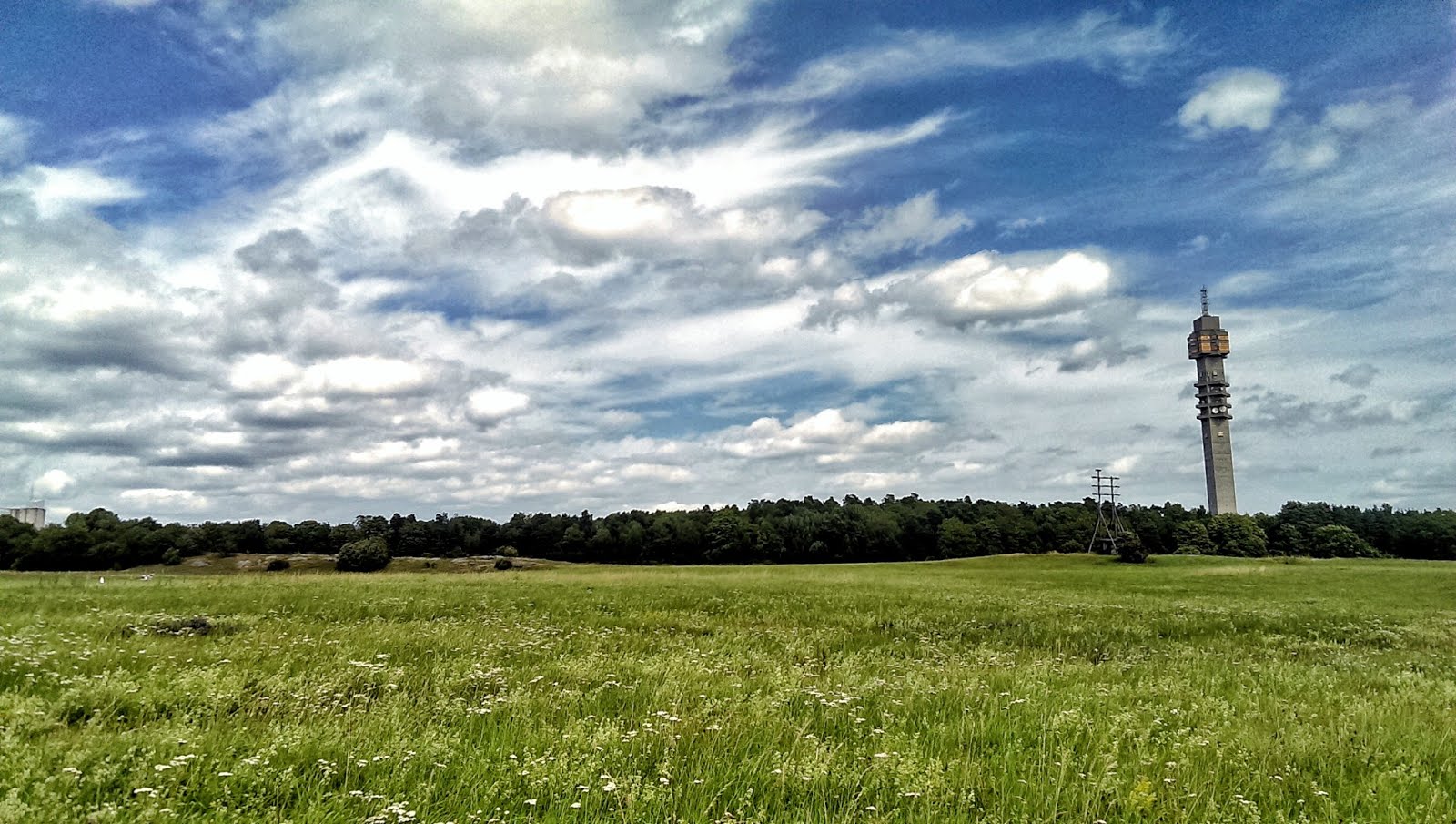
We visited the Gärdetmore, Ladugårdsgärdet located to the East of the Ostermalm district, known for being a wealthy and upscale area. Within the Gärdetmore is a large open space housing horses, walking trails and amazing views. This is physically reinforced by strategic planting of trees along the perimeter which separates the city and the park, giving a sense of countryside within the city. The absence of paved roads and benches strengthened the separation of people from the urban environment. The Ladugårdsgärdet is adjacent to a number of museums as well as a landmark tower called the Kaknas Tower, one of the tallest buildings in Sweden. The tower serves as a major vantage point in the urban design to draw more visitors and attention to the park from very far away. As tourists just walking in the city, the tower automatically led us to the destination of the park and the museums on the southern part of the district including the Police Museum, Sports Museum and Tekniska Museum (Museum of Science and Technology). All of these “attractions” and points of interests led us to discover the Gärdet.

This example shows us that in urban design, elements at many different scales have to combine together to successfully create interesting, walkable, and populated spaces. In this case, the elements come together to create a moment of surprise in which the natural environment can exist within the city. We believe that spaces like these are essential amenities to a sustainable city.


The Kaknäs tower

Trees separating the city and the open space in a natural setting


Wednesday, July 3, 2013

Sustainable Cities of Northern Europe Redux!

UC Davis Summer Abroad is once again sending a group of undergraduates from UC Davis and other universities to complete the month-long Sustainable Cities of Northern Europe course (SCONES as we are lovingly called). I created this course and look forward to a sixth summer abroad conducting applied research on eco-districts in cities around the world. This course combines lectures and research papers, with walking and biking tours, field work, urban design projects, and tours and discussions with local officials and experts, to understand various aspects of urban sustainability as applied in Sweden, Denmark, Germany and Switzerland. Beginning July 15, we will visit 10 cities and villages in four countries, exploring urban form and urban design, multi-modal transportation systems (transit of many forms, walking and biking), renewable energy projects, sustainable approaches to land use and neighborhood development, water conservation and water quality enhancement, and greening aspects of cities of all sizes.

Our journey begins in Sweden, with stops in Stockholm and Malmo, before continuing on to Copenhagen, Denmark, with side trips to the small university community of Trekonner. We will also visit Freiburg, often called Germany’s “eco-city,” and tour the Black Forest, visiting a series of small villages that use only renewable energy sources and that are net energy exporters. Our final destination is Lucerne, Switzerland.

This eight-unit, upper-division course draws students from fields as widespread as architecture, environmental policy, civil engineering, journalism, landscape architecture, economics and urban planning. Our 26 students will create blog entries as they travel, documenting unique aspects of urban sustainability with photos and writing.

-Jeff Loux